[ ERASMUS+ COOPERATION PARTNERSHIP // 2024–2027 ]
Where Game Theory Meets Game Design.
The European Game Science Lab (EGSL) is an interdisciplinary higher education alliance uniting five academic and innovation institutions across Germany, Italy, Turkey, and Lithuania. We combine behavioral game theory with systemic game design to build open-access pedagogical frameworks, card-based ideation tools, and critical curricula for a society in flux.
CONSORTIUM TELEMETRY[ KA220-HED ]
EU GRANT AGREEMENT ID2024-1-DE01-KA220-HED-000251014
PROJECT DURATION01.10.2024 – 30.09.2027 (36 MONTHS)
TOTAL GRANT VOLUME€ 400,000.00 (CO-FUNDED BY THE EU)
COORDINATING INSTITUTIONHTW Berlin — DE:HIVE Institute (Prof. T. Bremer)
PARTNER COUNTRIESDE • IT • TR • LT (5 Institutions)
5Academic & Innovation Nodes
4Interlinked Work Packages
17Published Field Dispatches
5 ECTSModular Game Curriculum
UPCOMING EVENTS & MILESTONESLIVE SCHEDULE // 2026
[ LEAD REPORT // WP4 ]2026-06-17 // HTW BERLIN // CULTURE & DESIGN WEEK
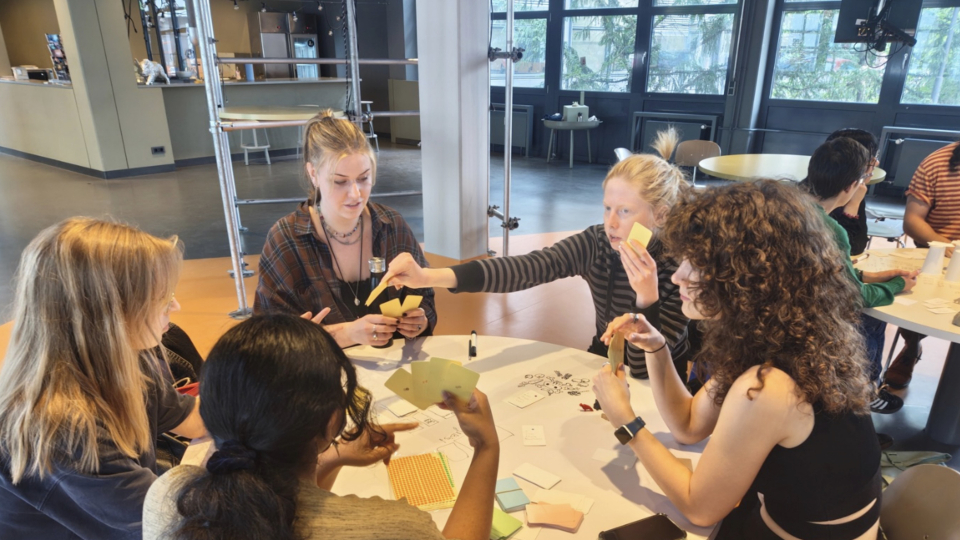
Creating prototypes with non-game-designers: LUNA at CuDe Week
In the first week of May 2026, DE:HIVE ran a five-day hands-on game design workshop at HTW Berlin’s Culture and Design (CuDe) Week. Using the LUNA Structures stack without Frame cards, 12 interdisciplinary students transitioned from rotating ideation to three playable tabletop prototypes.
KEY FINDING: Every team independently developed a coherent thematic frame without Frame card prompting.
[ READ FULL REPORT → ][ PUBLIC EXHIBITION // WP2 ]2026-06-11 // UNIVERSITY OF FLORENCE // GIX STAND
Bologna Play 2026 – Luna Framework Presented To Visitors
From 22 to 24 May 2026 at BolognaFiere, the European Game Science Lab presented the LUNA Framework at the GiX research booth — conducting live meta-ideation playtests with international festival visitors, educators, and designers.
FIELD QUOTE: “The framework demonstrated strong traction among international educators at festivaldelgioco, confirming the demand for tactile card-based curriculum tools.”
[ READ FULL REPORT → ][ WP2 ]2026-06-11
LUNA Course kickoffs at BAU University
HTW Berlin joined Bahçeşehir University (BAU) in Istanbul for the kickoff of two full-semester university courses — Game Studio and Tabletop Game Design — embedding the LUNA Framework directly into international game design curricula.
[ READ → ]COMPLETE CHRONICLE
Browse all 17 field reports from Skellefteå, Istanbul, Lucca, Florence, Bologna, and Berlin.
[ ALL 17 INSIGHTS → ]CORE PROJECT OUTPUTS & DELIVERABLESWP2 • WP3 • WP4 ARCHITECTURE
[ OUTPUT 01 // WP4 & WP5 FLAGSHIP TOOLSET ]
The LUNA Framework
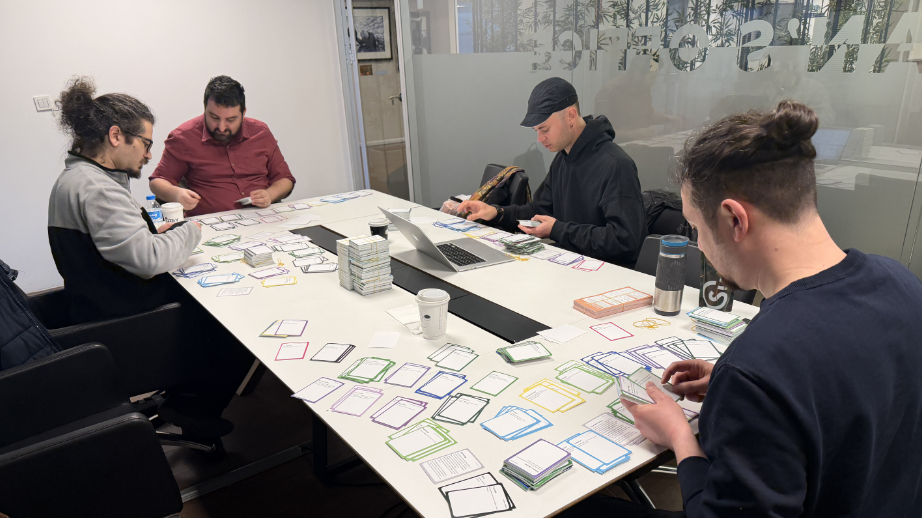
The Ludo-Narrative Game Design Framework (LUNA) is an empirical, card-based analysis and design system. Rather than treating game mechanics and narrative framing as separate silos, LUNA structures playful systems along a unified ontology tested with over 300 students, researchers, and industry practitioners.
01 / APCF REFERENCE AXISStructured decomposition along Agent, Process, Corpus, and Form.
02 / EFFECTUS & DUCTUSAnalytical separation between formal system outcomes and player guidance pathways.
03 / MODULAR CARD DECKSPhysical and digital prompt stacks for Situation, Social Frames, and Ludemes.
04 / AI REFLECTION LOOPSStructured GenAI co-ideation and bias-detection protocols for rapid prototyping.
[ OUTPUT 02 // WP2 & WP3 HIGHER EDUCATION ALLIANCE ]
The European Teaching Network
Established to endure well beyond the 2027 grant horizon, the EGSL Teaching Network connects universities, game labs, and lecturers across Europe. We co-develop open-access course blueprints, interdisciplinary summer schools, and cross-border game jams addressing societal transformation.
01 / 5-ECTS SHARED CURRICULUM14-week modular course blueprint adaptable to design, humanities, and STEM faculties.
02 / MICRO-CREDENTIALSStandardized European certification for educators and students in game system literacy.
03 / SUMMER SCHOOLS & JAMSAnnual field laboratories in Lucca, Florence, Berlin, and Istanbul ("Market of Ideas").
04 / BIAS & ETHICS WORKSHOPSCritical methodologies for identifying prejudices in game rules and generative AI.