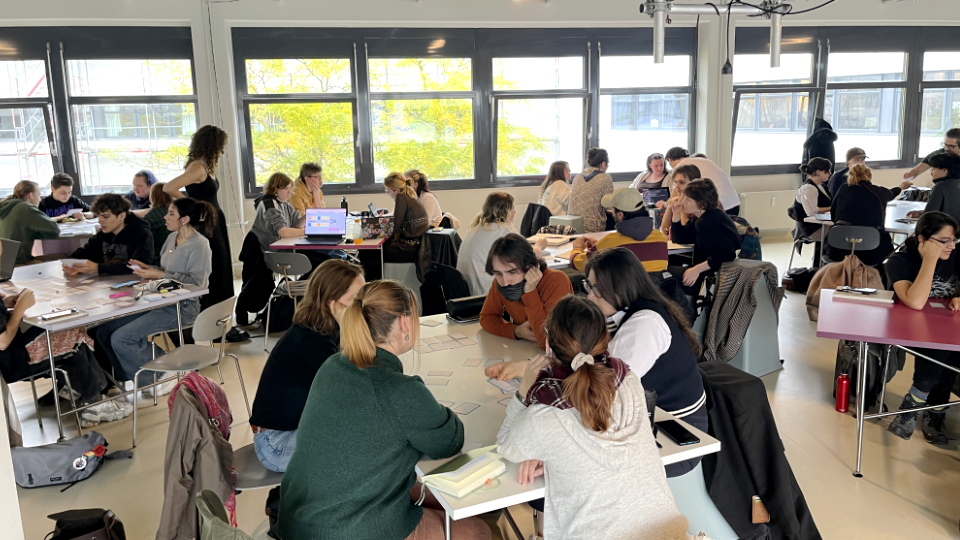
The LUNA-Framework playtest with DE:HIVE students offered a focused look into how guidance can actively support playful creativity. From the very start, participants engaged confidently with the LUNA-Framework, requiring only minimal guidance from the game master. The clear sequence of steps and card-based mechanics empowered groups to navigate the framework independently and with ease.
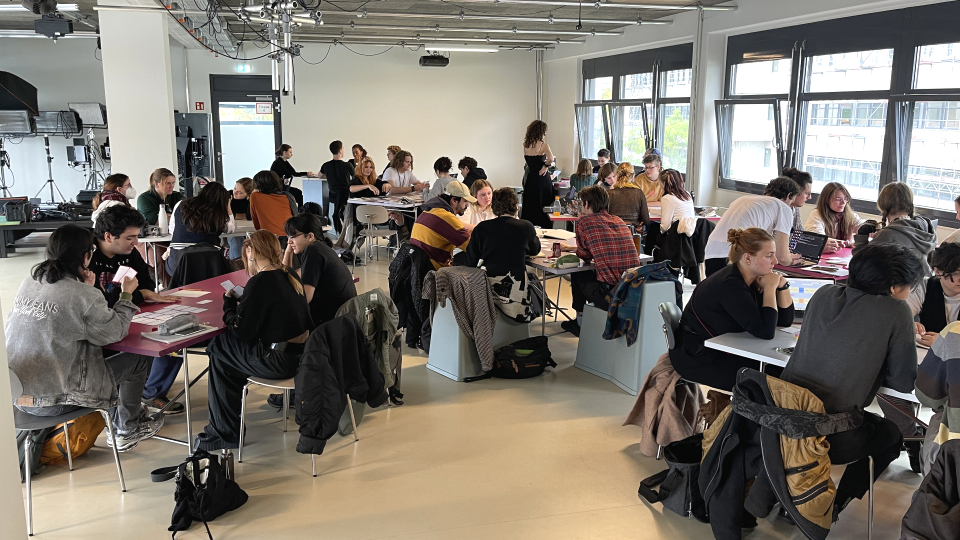
Situation Anchors & The Four-Card Constraint
Beginning with the situation card proved to be a strong entry point. It helped participants anchor their ideas early on, sparking more focused and active engagement. The four-card limit functioned effectively, encouraging deliberate choices rather than overwhelming possibilities. Even in moments when facilitation was not immediately present, groups intuitively self-regulated, respecting the restriction and maintaining the flow of play.
“Having defined steps makes idea generation much easier — I feel much freer during ideation.”
Feedback throughout the session was overwhelmingly positive. Students highlighted how the defined structure supported creativity rather than limiting it. “Having defined steps makes idea generation much easier,” one participant shared, while another reflected, “I feel much freer during ideation.”
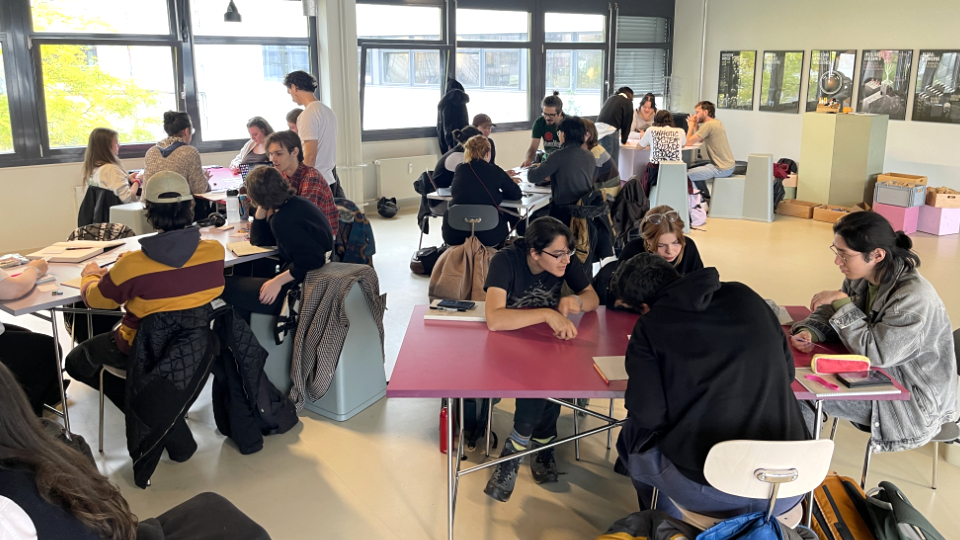
Ergonomic & Taxonomic Refinements
At the same time, valuable points for improvement emerged. Some participants noted that the font size on the cards was too small, and certain card names did not accurately reflect their descriptions. The mechanics deck, in particular, sparked mixed reactions, with some dissatisfaction around specific card contents and noticeable duplication.
Overall, the playtest demonstrated the strength of the LUNA-Framework in supporting autonomous, playful design while offering clear insights for refinement. Each observation feeds into the ongoing development of the system.