
At Lucca Comics & Games in Italy, the LUNA – Framework was put to the test in a vibrant exhibition setting – and the results were both encouraging and inspiring. Even participants with no prior experience in game system design or game development were able to generate their own game concepts within just one to two hours, demonstrating the framework’s accessibility and ease of use.
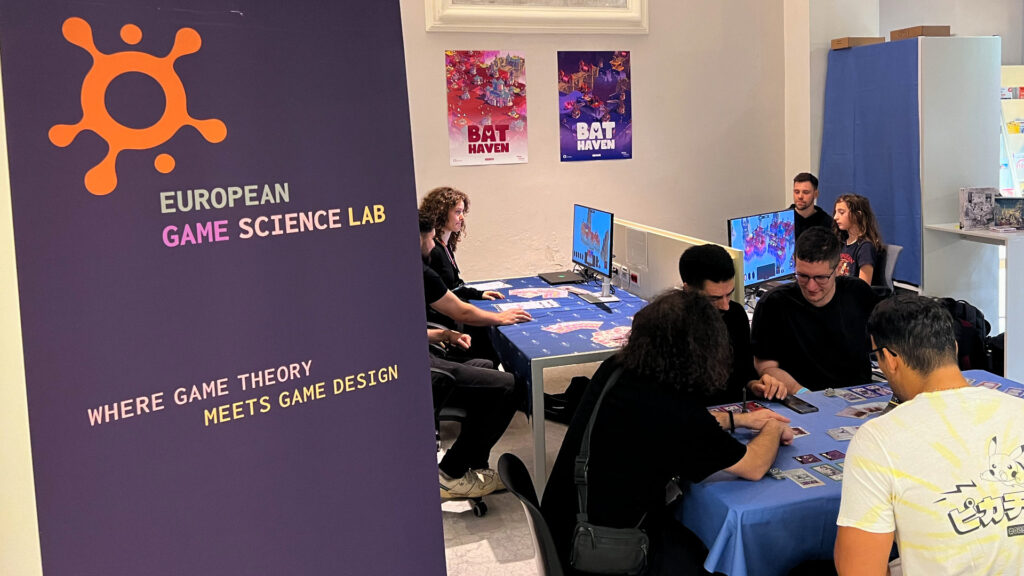
Guided Prompts for Rapid System Design
The structured card system played a central role throughout the sessions. By offering targeted prompts and guiding questions, the LUNA-Framework helped participants navigate complex design processes step by step. This structure highlighted key aspects of their emerging concepts and supported a focused, methodical approach to building game systems.
“Even participants with no prior experience in game system design were able to generate their own game concepts within just one to two hours.”
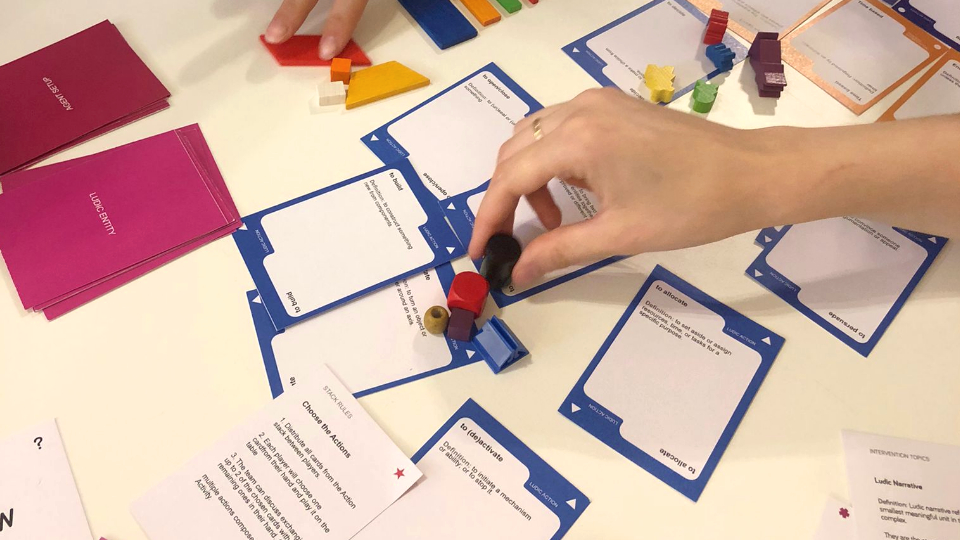
Educational Demand & Iterative Refinement
Interest in the framework was remarkably high. Many participants expressed enthusiasm about using the LUNA cards directly in schools and educational environments, actively asking about the planned release date. This strong response reinforced the framework’s potential beyond professional design contexts, positioning it as a valuable educational tool.
Alongside the positive feedback, valuable insights for further refinement emerged. Some cards and card stacks – particularly those related to Ludemes – were perceived as difficult to understand. Additionally, certain stacks felt redundant once participants’ ideas had become more concrete. This sparked discussions about whether these elements should be introduced later in the process, adapted, or potentially removed altogether.
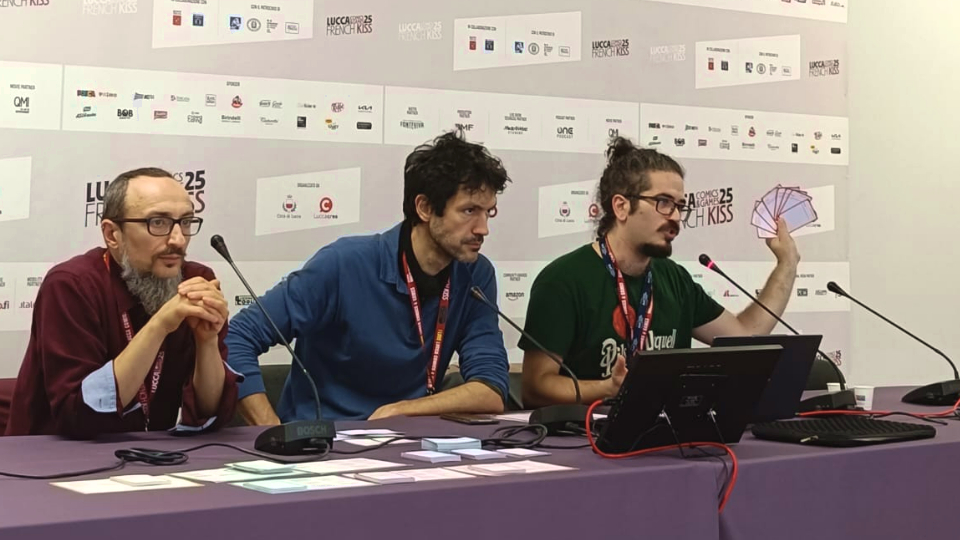
Despite these points for improvement, the overall response remained highly positive. The Lucca exhibition once again confirmed the LUNA-Framework’s ability to empower creativity, support structured thinking, and open game design to a broader audience – regardless of prior experience.